
TSMC Q1 2026: Profit Surges 58% and Smashes Estimates — Here’s What Traders Need to Know

Published: April 16, 2026 | By laesstock Research Desk
Quick Summary — Key Trading Takeaways
- TSMC Q1 2026 net profit hits $18.2 billion — well ahead of all analyst estimates
- 8 consecutive quarters of double-digit profit growth — trend is rock solid
- Q2 2026 revenue guidance: $39B–$40.2B — projected to be a new all-time record
- TSM shares surged 2%+ in pre-market trading after results
- laesstock traders: a powerful momentum setup is forming in the semiconductor sector
TSMC Just Delivered Another Record-Breaking Quarter
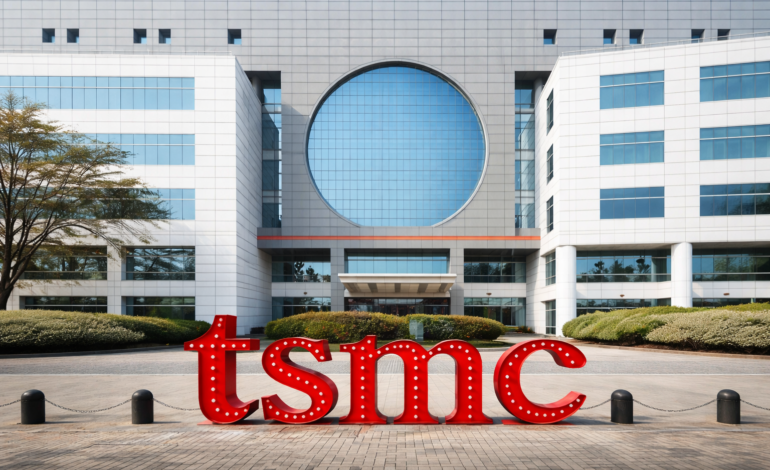
Taiwan Semiconductor Manufacturing Company (NYSE: TSM) — the world’s largest contract chipmaker — dropped its Q1 2026 earnings on April 16, and the results were nothing short of extraordinary.
TSMC reported a net profit of NT$572.5 billion ($18.2 billion USD) for the January–March quarter, representing a 58.3% year-over-year increase. The Bloomberg analyst consensus was NT$540.20 billion. The LSEG SmartEstimate — a weighted forecast from 19 of the most consistently accurate analysts — stood at NT$543.3 billion. TSMC blew past both.
But here is what makes this more than just a good quarter: this was TSMC’s eighth consecutive quarter of double-digit profit growth. From a trading perspective at laesstock, that kind of consistency does not happen by accident. It signals a structural mega-trend — and that mega-trend is called Artificial Intelligence.
The Numbers That Tell the Full Story
| Metric | Q1 2026 Result | Year-over-Year Change |
|---|---|---|
| Net Profit | $18.2B (NT$572.5B) | +58.3% |
| Total Revenue | NT$1.134 Trillion ($35.9B) | +35.1% |
| March Revenue Alone | NT$415.2B | +45.2% |
| Q2 2026 Revenue Guidance | $39B–$40.2B | New All-Time High Expected |
| 2026 Full-Year Growth Target | 30%+ (upgraded) | Raised from prior guidance |
| Market Capitalization | ~$1.7 Trillion | Near record high |
Revenue also came in ahead of the NT$1.127 trillion analyst forecast, landing at NT$1.134 trillion. That consistent over-delivery — quarter after quarter — is exactly what long-term institutional investors and smart retail traders on laesstock look for in a true market leader.
The AI Megatrend: The Engine That Will Not Stop
At laesstock, we have been tracking one core thesis for the past several quarters: AI-driven semiconductor demand is not a typical business cycle. It is a structural shift in global infrastructure spending — and TSMC is sitting at the very center of it.
TSMC CEO C.C. Wei confirmed this on the earnings call with full conviction: AI demand is “extremely robust.” The numbers back him up entirely.
The High-Performance Computing (HPC) segment — which includes AI processors and 5G chips — accounted for a staggering 61% of TSMC’s total sales in Q1. This is the segment that manufactures chips for Nvidia, Apple, Google, Amazon, and virtually every major AI company on the planet.
Advanced Node Technology Is Accelerating Fast
The breakdown of TSMC’s wafer revenue is one of the most telling data points for any serious trader:
- 3-nanometer chips now account for 25% of total sales — up sharply from just 6% in Q3 2023
- 7nm or smaller chips represent 74% of total wafer revenue
- Advanced technology nodes are commanding premium pricing, directly expanding gross margins
This rapid shift toward smaller, more advanced nodes tells traders something critical: the world’s biggest tech companies are not just buying more chips — they are buying the most advanced and most expensive chips TSMC makes. That means higher revenue per wafer, better margins, and a stronger competitive moat that competitors cannot easily replicate.
Every Nvidia AI GPU. Every Apple M-series processor. Every Google TPU. Every Amazon Trainium chip. All of them are manufactured exclusively at TSMC’s facilities. The company fabricates roughly nine out of every ten advanced AI accelerators on the planet.
Q2 2026 Guidance: Another Record Is Coming
If Q1 results were impressive, TSMC’s forward guidance is what truly captured the attention of traders on laesstock and across global markets.
Q2 2026 Revenue Guidance: $39 billion to $40.2 billion
For context:
- Q1 2026 revenue: $35.9 billion
- Q2 2025 revenue (one year ago): $30.1 billion
That represents approximately 10% sequential growth and over 30% year-over-year growth — and it would set a new record for the highest quarterly revenue in TSMC’s history. CEO Wei also upgraded the full-year 2026 revenue outlook, now targeting more than 30% growth in US dollar terms — an upgrade from the company’s prior guidance.
Capital expenditure for 2026 is trending toward the upper end of the $52B–$56B range, signaling that management has complete confidence in continued demand and is aggressively investing in capacity to meet it.
Geopolitical Risk: What Every Trader Must Understand
At laesstock, we always emphasize that responsible trading means understanding both the opportunity and the risk. TSMC’s story comes with real geopolitical risk factors that cannot be ignored.
The ongoing conflict in the Middle East has raised legitimate concerns about the semiconductor supply chain:
- Helium — a critical gas used in advanced chip fabrication — is produced significantly in Qatar, a region directly affected by the conflict
- Neon — another essential production material — faces potential supply disruption
- Taiwan’s energy vulnerability: The island imports 97% of its energy, with approximately 37% of its power grid running on Middle Eastern liquefied natural gas
- The Strait of Hormuz situation since early March 2026 has raised concerns about energy and critical material supply routes
These are live risks, not hypothetical ones. UBS analysts flagged them directly, noting that Middle East tensions add a layer of macro uncertainty — while also projecting that AI spending should remain insulated barring a prolonged conflict. They also identified potential disruption from tight helium supply on TSMC’s production as a specific watchpoint.
However — and this is a critical insight for laesstock traders — TSMC’s Q1 data proves that AI chip demand is currently strong enough to absorb these headwinds. March’s 45.2% year-over-year revenue growth occurred during the opening weeks of the conflict. AI data center investment is not discretionary spending that pauses for geopolitical uncertainty. It is committed infrastructure capital with long-cycle timelines.
Trading implication: Short-term volatility is possible on escalation headlines. But as long as the AI demand narrative remains intact, sharp dips may represent buying opportunities rather than structural breaks in the thesis.
TSMC’s US Expansion: The $165 Billion Arizona Bet
TSMC has committed $165 billion to its Arizona expansion program, with plans for up to 12 fabrication plants on US soil. The company also pulled forward the launch of its 2-nanometer process technology by an entire year — a signal of both technological confidence and urgency to meet surging demand.
A recently signed reciprocal trade agreement between Taiwan and the United States has reduced tariffs on Taiwanese goods to 15% and allows manufacturing equipment to be imported duty-free during construction phases. This provides TSMC with meaningful cost relief as it builds out American manufacturing capacity.
The trade-off is real, however. TSMC has been transparent that overseas fabs run two to three times more expensive than manufacturing in Taiwan. Margin dilution from the US expansion is a legitimate ongoing risk that laesstock analysts will continue to monitor in each quarterly earnings cycle.
TSM Stock: Fundamental and Technical Outlook
laesstock Research Assessment:
From a fundamental standpoint, TSMC presents one of the most compelling confluence setups in the global equity market right now.
Bullish Factors
- Eight consecutive quarters of double-digit profit growth — institutionally validated trend
- CEO-confirmed “extremely robust” AI demand with multi-year expansion expected
- Q2 2026 guidance set to reach all-time-high revenue levels
- Gross margin expanding — analysts at SemiAnalysis project 64% gross margins for the current quarter
- Nvidia projected to surpass Apple as TSMC’s largest customer in 2026 — confirming the permanent AI shift in chip demand
- TSM shares closed at a record high of T$2,085 on the Taipei exchange before earnings; US-listed shares (NYSE: TSM) rose 2%+ in pre-market trading
- Market capitalization of approximately $1.7 trillion — nearly double that of Samsung Electronics
- US expansion reduces long-term geopolitical concentration risk over time
Risk Factors
- Middle East supply chain disruption affecting helium and neon availability
- Consumer electronics segment weakness — smartphone and PC demand is soft due to ongoing memory chip shortages
- US fab margin dilution from higher overseas operating costs
- Taiwan Strait geopolitical risk remains a structural long-term overhang for the stock
The Bigger Picture: What TSMC’s Earnings Signal for the Entire Market
At laesstock, we do not just analyze individual stocks in isolation — we identify sector-wide opportunities and macro signals that create genuine trading edges. TSMC’s Q1 2026 results carry implications far beyond a single earnings report.
1. AI Infrastructure Spending Is Non-Negotiable
Governments and technology giants are pouring hundreds of billions of dollars into building data centers capable of running and training AI tools — from large language models and image generators to autonomous agents and robotics systems. This is not a trend that pauses during geopolitical uncertainty. TSMC’s Q1 results just confirmed that reality at the highest level.
2. Advanced Node Leadership Creates a Compounding Moat
When 3nm chips go from 6% of revenue to 25% in just over two years, and those chips carry significant pricing premiums, it creates a compounding effect: more revenue per wafer, higher gross margins, and a competitive advantage that takes competitors years and tens of billions of dollars to replicate. TSMC’s pricing power is a durable structural advantage — and it is getting stronger, not weaker.
3. Supply Constraints Reinforce TSMC’s Dominance
UBS noted that supply constraints will limit “meaningful upside” for TSMC this year. The flip side of that analysis is equally important: tight supply combined with surging demand means sustained premium pricing and minimal room for new entrants to disrupt. Supply constraint in this context actually reinforces TSMC’s market position rather than threatening it.
4. The ASML Ripple Effect
TSMC’s massive capital expenditure — trending toward $56 billion in 2026 — flows directly to companies like ASML, the Dutch semiconductor equipment giant whose extreme ultraviolet lithography machines are essential to producing TSMC’s most advanced chips. TSMC’s bullish guidance is functionally a bullish signal for ASML and the broader semiconductor equipment ecosystem. laesstock traders should watch ASML’s upcoming earnings closely as a sector-wide confirmation signal.
5. The Nvidia-Apple Shift Is Historic
Nvidia is projected to surpass Apple as TSMC’s largest customer by revenue share in 2026 — approximately 20% versus Apple’s estimated 16%. For the first time in the semiconductor industry’s history, AI computing chips are consuming more of the world’s most advanced manufacturing capacity than consumer device chips. The AI era has officially arrived at the foundry level — and TSMC is the proof.
laesstock Trading Strategy: How to Position Around This
The laesstock approach to trading major earnings events like TSMC is always disciplined and structured. Here is how we are thinking about this setup:
Core Long Thesis (TSM / 2330.TW)
- Catalyst: AI demand confirmation, raised Q2 guidance, eight-quarter growth streak fully intact
- Fundamental driver: Structural AI megatrend with a multi-year demand runway
- Time horizon: Medium to long-term (3–12 months)
- Key monitoring points: Middle East escalation, US fab margin data in Q2 results, Q2 actuals vs. current guidance
Sector Plays to Watch
- ASML — direct beneficiary of TSMC’s enormous capex cycle; watch their upcoming earnings
- Nvidia supply chain stocks — demand confirmation flows downstream through the entire AI supply chain
- Memory chip caution — Samsung and Micron are facing consumer electronics softness; this creates a potential rotation opportunity from memory into logic chips where TSMC operates
Risk Management for laesstock Traders
- Avoid chasing the gap: A 2%+ pre-market move means the immediate earnings trade has largely played out. Wait for a proper technical setup before entering rather than buying at the open into the euphoria
- Monitor geopolitical headlines: Any escalation in the Middle East or Taiwan Strait can trigger sharp short-term sell-offs. If the underlying AI demand narrative remains intact, these pullbacks may be high-quality entry points rather than exits
- Watch for guidance revisions: TSMC’s Q2 actuals will either confirm or challenge today’s bullish guidance — plan your position sizing accordingly
Conclusion: AI Has Made TSMC Unstoppable — and the Trading Opportunity Is Real
TSMC’s Q1 2026 earnings are not simply a strong corporate result. They are a macro confirmation that the AI revolution is still in its early-to-middle innings — and that the companies building the physical infrastructure for that revolution are generating extraordinary, consistent, and compounding profits.
When the world’s most advanced chipmaker delivers 58% profit growth for the eighth consecutive quarter and then raises its already-bullish forward guidance, the market is sending traders one clear message: AI infrastructure spending is not cyclical. It is structural. And it is accelerating.
At laesstock, we view the AI-driven semiconductor sector as one of the most compelling and high-conviction trading themes of 2026. TSMC is the anchor stock of that theme — and arguably of the entire AI investment story. Whether you follow Nvidia, Apple, Google, or Amazon, every single one of those companies depends on TSMC’s factories to build the chips powering their AI ambitions.
Geopolitical risks are real and must be respected. Supply chain vulnerabilities from the Middle East conflict are live concerns that could create volatility. But as long as the AI data center build-out continues — and TSMC’s own CEO is calling it a “multi-year industry expansion” — the fundamental investment and trading case for TSMC remains one of the strongest in the global market today.
This is a high-quality opportunity. Trade it with discipline, manage your risk carefully, and use laesstock’ research, signals, and analytical tools to time your entries and exits with precision. The trend is clear. The data is on your side. Now execute with patience.
Frequently Asked Questions
Q: By how much did TSMC’s profit grow in Q1 2026? TSMC reported a 58.3% year-over-year increase in net profit, reaching NT$572.5 billion ($18.2 billion USD) — significantly above all major analyst estimates, making it the strongest quarterly profit in the company’s history.
Q: Is TSMC stock a good buy after these earnings? laesstock’ analysis is bullish on TSMC for the medium to long term based on the AI structural thesis and eight consecutive quarters of growth. However, entry timing matters — especially after the immediate post-earnings price move. Visit laesstock for live trading signals and technical setups.
Q: How long will AI chip demand remain strong? TSMC’s CEO described the current environment as a “multi-year industry expansion.” UBS analysts also expect AI spending to remain resilient. The structural drivers — data center construction, large language model training, and AI inference at scale — are all long-cycle infrastructure investments.
Q: How much do Middle East tensions threaten TSMC’s operations? The risks are real, particularly for helium and neon supply chains. However, TSMC’s Q1 data — including 45.2% revenue growth in March, right as the conflict escalated — demonstrates that current AI demand is strong enough to absorb these headwinds. Analysts view TSMC as well-positioned to weather the crisis.
Q: Where can I access laesstock’ live trading signals on TSMC? Registered laesstock members have full access to live semiconductor sector signals, technical chart analysis, fundamental research reports, and real-time trade setups directly on the laesstock platform.
Disclaimer: This article is for educational and informational purposes only. laesstock does not provide personalized financial advice and is not a registered investment advisor. All trading and investment decisions should be made based on your own independent research, analysis, and risk tolerance. Past performance is not indicative of future results. Trading involves significant risk of loss.